
PET-G Gloop! 120ml (4oz)
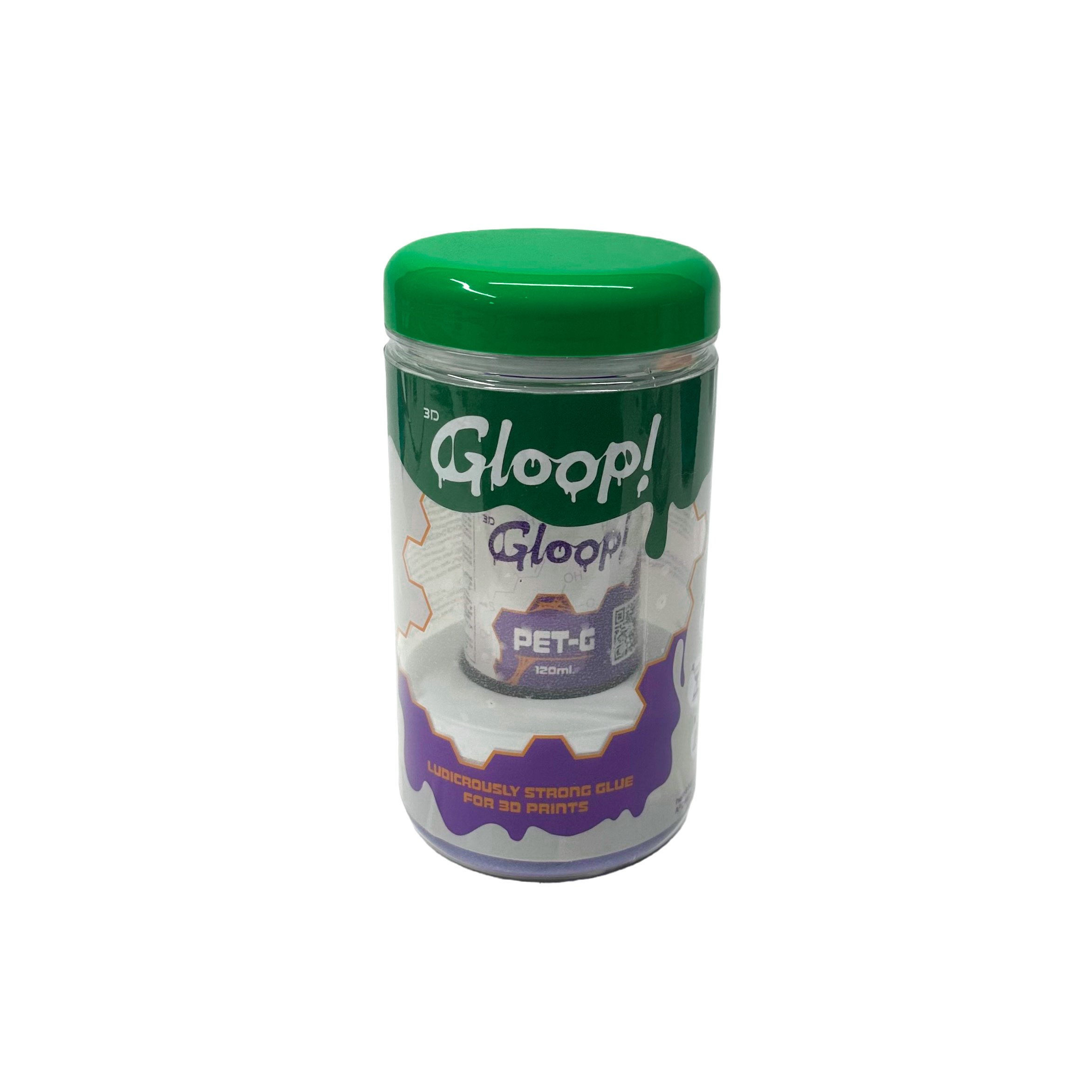
PET-G Gloop! 120ml (4oz)
PETG (pronounced "PEE EEE TEE GEE"... not to be confused with a pet rock, which requires no adhesive) is a fantastic printing material: tough, glossy, and forgiving. Gluing it, however, has historically been misery. CA glue pops off. Epoxy peels. And so the Scientists engineered PETG Gloop!: an adhesive designed to provide the strongest bond between two 3D-printed PETG parts, period.
How does the Science Sauce work? 3D Gloop! is a hybrid adhesive... part solvent cement, part reactive glue, all science. First, the carrier solvents gently dissolve the surface of your print. Then the monomer complex gets to work: as the solvent evaporates, it chemically cures and crosslinks directly INTO the plastic. You're not sticking two parts together, you're welding them into one. That's why a proper Gloop! joint is stronger than the plastic around it, and why super glue (a weak mechanical bond wearing a lab coat) can't compete. It's Science! Not Magic… (the full nerd cut)
Using it is printed on the jar: sand both mating surfaces, slather that Science Sauce on BOTH of them, squeeze together with a slight twist, clamp for 15 minutes, and full POWER arrives in 24-ish hours. New to Gloop!? The Knowledge Base has the complete training program, videos included.
A few notes about working with PETG Gloop!
It's thinner than the other flavors, on purpose. PETG demands a higher solvent load for reactivity. It's not watered down, it's calibrated... just be mindful that runs and drips are common. Gloves on, wax paper down.
Print test coupons first. Unlike PLA, PETG isn't made by one supply chain... every producer's synthesis yields different molecular weights and additives, so some PETGs bond better than others. It's a go/no-go situation: a good bond on your test coupon means your real prints will weld beautifully. A weak bond, or Gloop! that won't cure? No amount of prep will fix it... change filaments.
Strength hack: after clamping, gently warming the joint increases final bond strength. Hair-dryer warm, not heat-gun apocalypse.
Shake well, settle 2 minutes, open away from your face. 30-60 seconds of open time.
Squeeze-out is a GOOD sign. Don't wipe... dry, then slice (here's how).
Use within 90 days of opening; store in the containment vessel (the retail box).
Bonding PETG to PLA or ABS? Respective Gloop! on the respective part, press with a twist. Gloop! bonds to Gloop!, and it bonds quite strong. Full guide.
Made in our laboratory in East Alton, Illinois... vertically integrated, American made, and trusted in automotive prototyping, defense & aerospace, medical modeling, and large-scale architecture. Where is 3D Gloop! made?
🖼 IMAGE — 120ml PETG Gloop! brush-top bottle, front label visible
🖼 IMAGE — two glossy PETG parts welded, held up to the light at the seam
[BUTTON: Gloop it!]
Bonds: PETG and co-polyester filaments (test coupons first!) Not for: PLA (that's PLA Gloop!), ABS/ASA (that's ABS/ASA Gloop!), painted surfaces, other glues' leftovers, magnets, or anything entering the human body. Still watching you.